Understanding the Positional Hierarchy of Ground Grappling
Brazilian Jiu-Jitsu operates on a clear strategic hierarchy where superior body positioning always precedes submission attempts. For dedicated practitioners across Irving, Texas, learning which positions offer maximum control with minimal energy output transforms how they approach every round of live rolling. Instead of chasing low-percentage finishes from awkward angles, skilled grapplers systematically advance toward dominant checkpoints that neutralize an opponent's athleticism. Once you restrict an opponent's hip mobility and spinal alignment, finishing holds appear with far less physical strain.
Mastering these foundational positions allows a smaller person to neutralize a much heavier training partner safely. Exploring how gravity, skeletal frames, and hip angles interact gives you a reliable blueprint for both self-defense and sport progression. Our structured martial arts programs emphasize positional dominance from day one, teaching students how to build unbreakable control before attacking.
DISCOVER MA BJJ ACADEMY
CLICK HEREDominant Top and Rear Control Positions
The most effective positions in grappling deny the opponent base points while keeping your own center of gravity low and connected. Back control, full mount, and heavy side control represent the gold standard of positional dominance because they force your partner into purely defensive reactions.
Back Control with Hooks and Seatbelt Grip
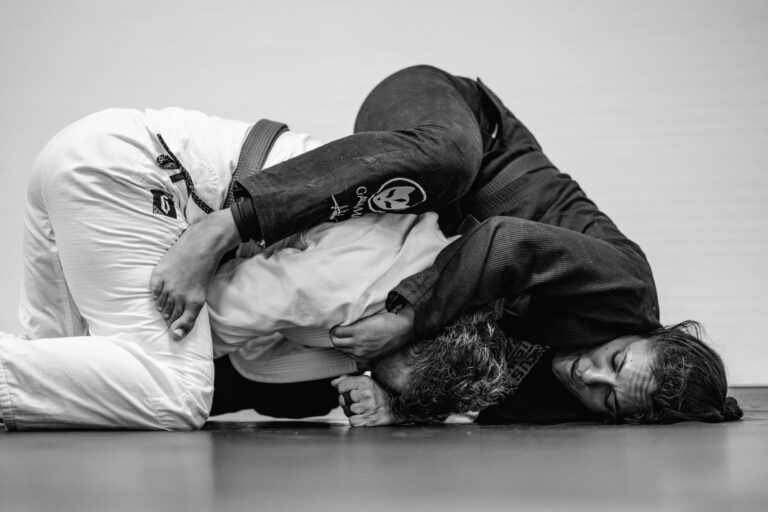
Taking the back sits at the very top of the Jiu-Jitsu hierarchy because an opponent cannot generate meaningful offensive strikes or sweeps facing away from you. Securing hooks in back control by placing both heels inside the opponent's thighs controls their hip rotation completely. Pairing those leg hooks with a tight seatbelt grip, where one arm passes over the shoulder and the other locks under the opposite armpit, glues your chest to their upper back.
From this connected alignment, you dictate every movement while protecting your own limbs from counterattacks. Maintaining chest-to-back pressure stops them from dropping their shoulders to the mat to escape. Understanding how to secure these tight connections without burning out your arms builds directly on the fundamentals outlined in our beginner mat survival and framing guide.
Full Mount and Side Control Stabilization
Full mount utilizes direct downward gravity to pin an opponent's hips to the floor while isolating their arms from their torso. By keeping your knees tucked tight into their ribs and driving your hips forward, you eliminate the space required for a bridge and roll escape. When the person underneath reaches upward to push your chest, they immediately expose their elbows to straight armbar setups and cross-collar choke entries.
Similarly, effective side control retention relies on cross-face shoulder pressure combined with strong underhook control on the far side. Turning their chin away prevents them from aligning their spine to execute a hip escape, forcing them to carry your full body weight. Mastering calm, deliberate weight distribution under pressure mirrors the tactical patience explored in our article on mental focus and problem solving during live rolling.
High-Percentage Defensive and Offensive Guards
Being underneath a larger opponent does not mean losing control of the exchange when you understand bottom guard mechanics. A well-structured guard acts as a dynamic shield that breaks posture, disrupts balance, and creates immediate sweeping angles.
Closed Guard Posture Control and Sweeps
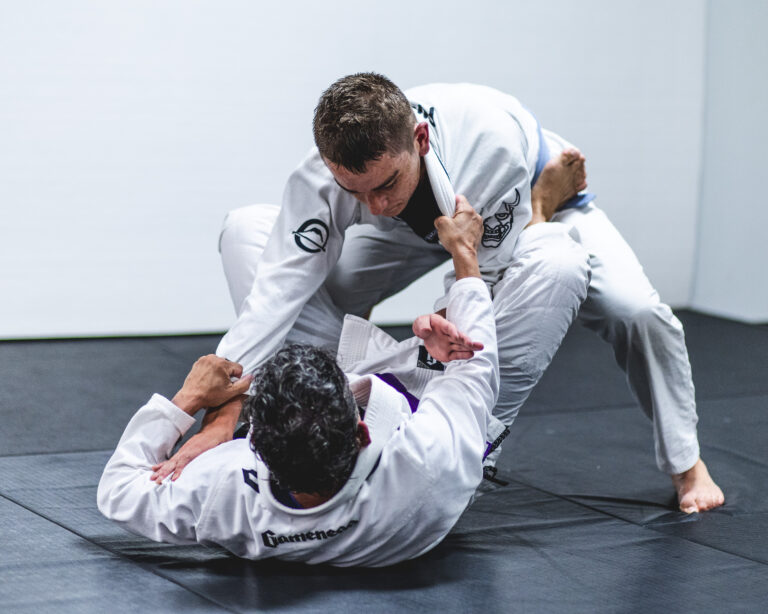
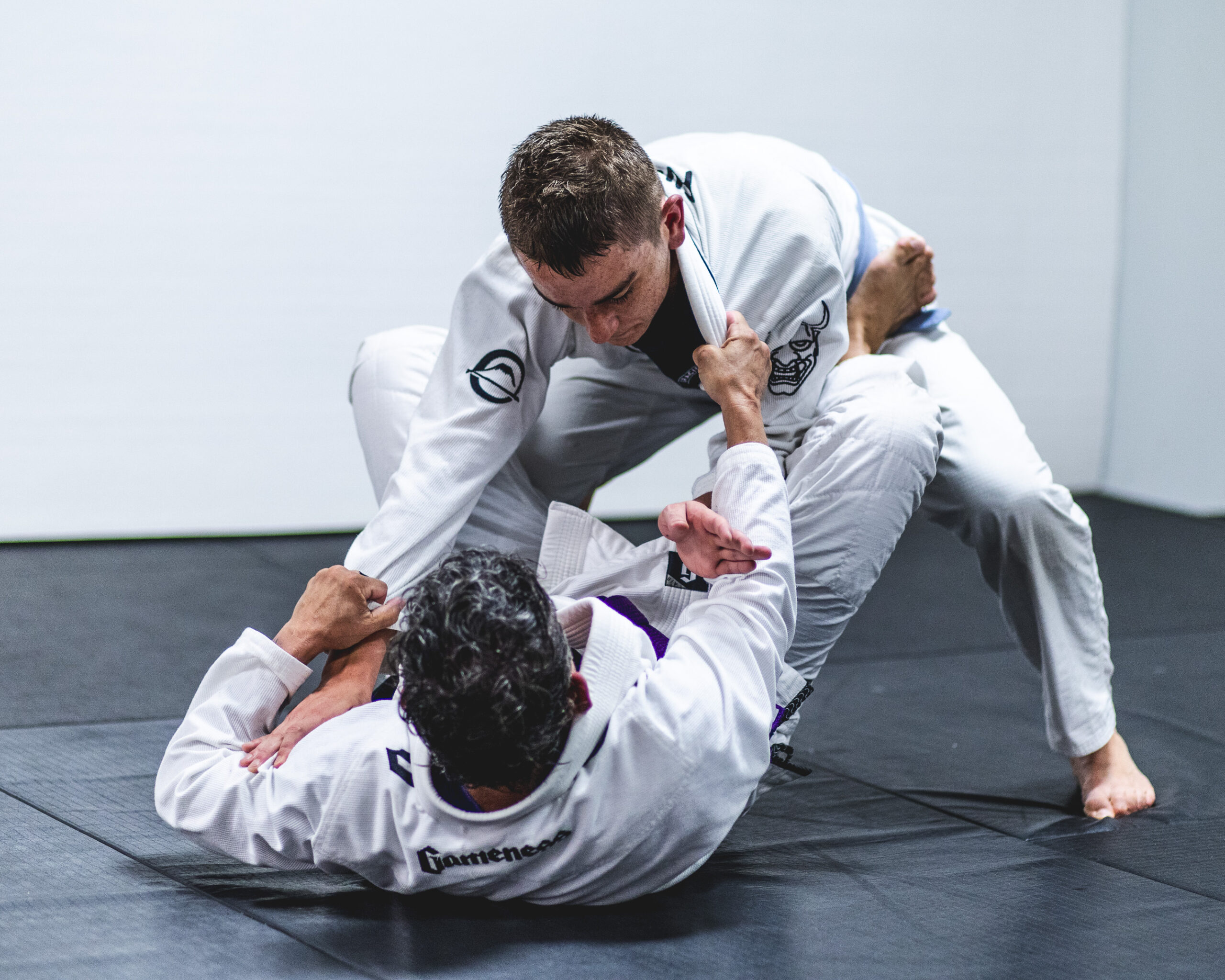
Closed guard remains one of the most reliable defensive and offensive systems in martial arts history. By locking your ankles behind the opponent's lower back and pulling your knees toward your chest, you force them to carry your weight while breaking their closed guard posture. Constant grip fighting on the collar and sleeves prevents them from standing up or establishing base points on your hips.
Once their posture is broken forward, mechanical sweeps like the scissor sweep or hip bump sweep require minimal muscular effort. Under the guidance of Professor Marcus Antelante, who brings nearly thirty years of martial arts experience alongside a Bachelor's Degree and a Post-Graduate Degree in Physical Education, students learn exact hip angles for every transition. Our highly trained instructors break down these foundational guard mechanics clearly, and you can read more about our academy curriculum and teaching philosophy on our website.
Half Guard Recovery and Underhook Leverage
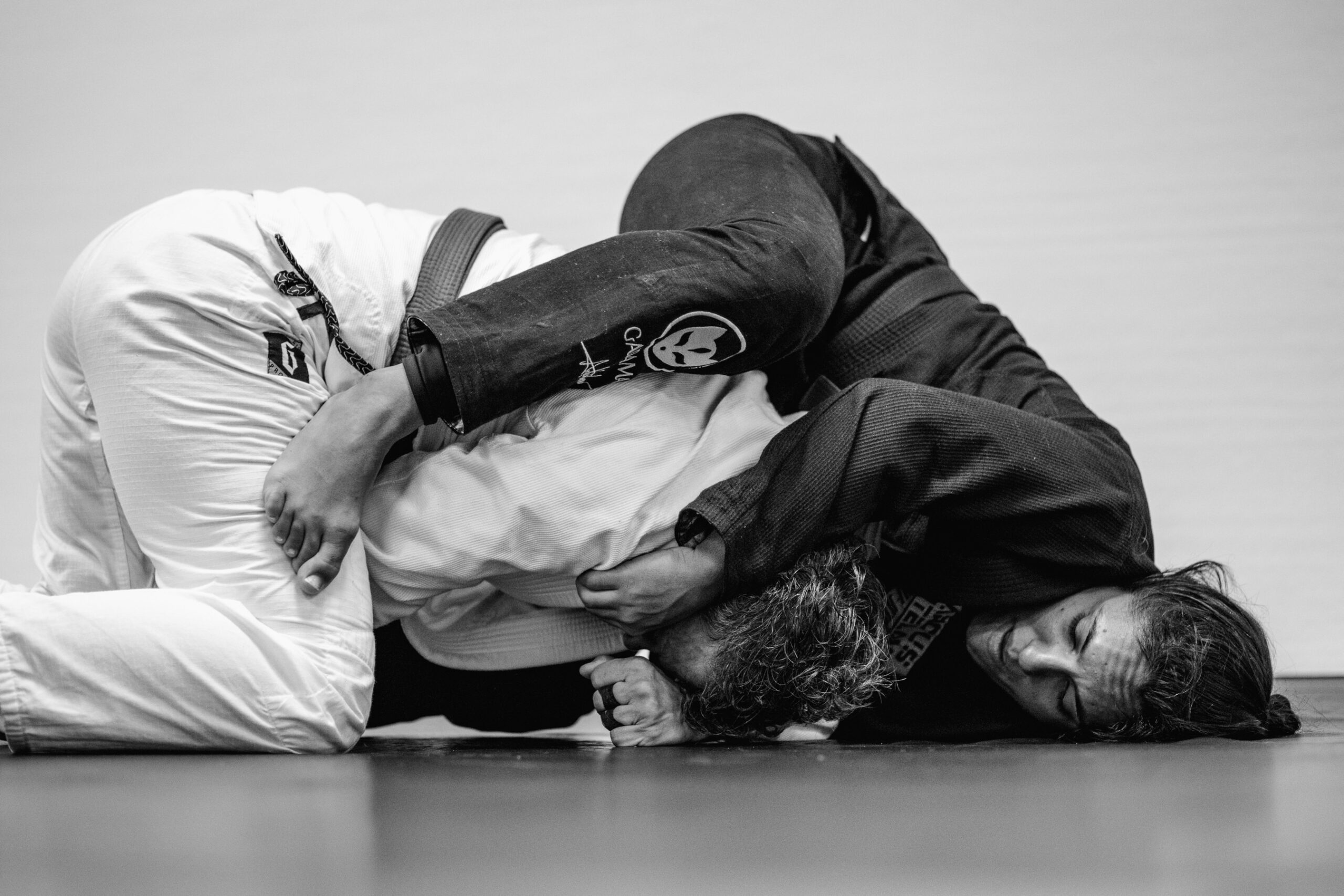
When an opponent bypasses your knees, half guard recovery prevents them from settling into heavy side control. By trapping one of their legs between yours and immediately fighting for a deep underhook control, you stay on your side rather than getting flattened onto your back. From this angled position, your bottom knee acts as a strong structural shield against their chest.
Winning the underhook battle lets you come up onto your knees to wrestle for a takedown or transition smoothly into the back. Even during fast-paced scrambles, maintaining disciplined nasal breathing and relaxing non-essential grips keeps grip fatigue at bay. If you want to troubleshoot specific guard retention details one-on-one, our private Jiu-Jitsu coaching sessions provide tailored biomechanical feedback.
Integrating Positions Into a Complete Game
True technical fluency develops when you link individual positions together into smooth chains rather than treating each move in isolation. If an opponent defends your scissor sweep from closed guard, transitioning directly into a tripod sweep or armbar keeps them perpetually reacting to your rhythm. Consistent mat time builds the tactile sensitivity needed to feel weight shifts instantly and tap early whenever caught in a clean joint lock.
DISCOVER MA BJJ ACADEMY
CLICK HEREUnderstanding positional hierarchy turns grappling from an exhausting physical brawl into a calculated, rewarding discipline. At MA BJJ Academy, our well-trained coaching staff guides students step by step through every control point, ensuring safe, structured development on clean mats.
Experience firsthand how leverage and body mechanics outperform raw strength. Visit our academy at 2108 Hurd Drive, Suite 200 in Irving, Texas, or contact our team today to schedule your free trial class and start building a rock-solid foundation.